Wednesday, April 19, 2006

Miracles(1): Its Meaning & Relevance

At the FCBC website, I found this write-up at their "Happenings" column Miracles begin with asking.

The column begin with a verse from Matthew 7:7 - 8, "Ask and it will be given to you; seek and you will find; knock and the door will be opened to you. For everyone who asks receives; he who seeks finds; and to him who knocks, the door will be opened." Then it goes on to say that it is "Amazingly simple? Apparently yes." I don't quite get what it is meant by this. Simple to do what? "Apparently yes"to what? Does it mean that God would give us everything we ask for?

The column goes on to say this: "In the book of Acts, God provided the answers whenever the disciples of Christ prayed. From boldness in preaching (4:24) to the baptism of the Holy Spirit (8:15), and from raising the dead (9:40) to the release of Apostle Peter from prison (12:5), the disciples prayed and God answered."

While I believe the account as recorded in Acts, the use of these verses in the book of the Acts to the Apostles to prove God always answer our request is not really appropriate. A greater appreciation of the context and content of these prayers is needed. However, as I read on, it becomes a little clearer. The "Amazingly simple? Apparently yes." refers to reaching out to the multitudes. It is indeed true that "When we realise that all it takes is prayer and intercession, it stirs the little faith that we have within."

This
his write-up at their "Happenings" column is actually to ask members of FCBC to tell them that reaching out to the multitudes is not difficult, members should invite 12 people to the Miracle Weekend on 24 and 25 June is just a matter of simply asking.

I agree that
inviting people to Church is just a matter of simply asking, but to a "Miracle Weekend"? Does God only work on 24 and 25 June? Of course, FCBC is not alone in this, many other churches in Singapore do this. Many of the traditional mainline denominational churches are 'guilty' of this too. Do we really need miracles to convince non-believers? Doesn’t Romans 1:16 says that the gospel is “the power of God for salvation to everyone who believes”. Can’t the Gospel alone converts people – brings them to faith and repentance? Doesn’t Romans 10:17 says, "So faith comes from hearing, and hearing by the word of Christ." And 1 Peter 1:23-25 says, "You have been born again not of seed which is perishable but imperishable, through the living and enduring word of God. . . . And this is the word which was preached to you." So it is true that we are born of God and converted by means of hearing the powerful word of God, the gospel.

Another article "The call for revival" I read at the Agora Forums wrote this:


God promised the outpouring of His Spirit in the last days. That means to say that, God's Spirit will be more evident in the last days. We will see more and more people, prophesying, sharing their vision, performing healing and miracles etc. When we see these things happening more and more, we can say that the Lord is coming soon and that His work is being increased so that more people will know Him and that His church will be ready for His coming. (emphasis in bold is mine)


A cursory reading of what he wrote seems to make sense, but on a closer reading, there is some problem with it.
(I must say that I do agree with him on certain points. ... but whether I agree is not important! If they are biblical, they are biblical.) Yes, we live in the last days. The Bible makes it clear that the last days began when Jesus arrived. "Last Days" refers to the entire period between the first and second advents of our Lord Jesus Christ. If this were the case, we would have been hearing a lot about miracles for the last 2000 years. From Church history, we see that this is not true! Maybe, he's saying that we are living in the latter portion of the last days before our Lord Jesus returns. ... His argument that there would be more miracles is not very convincing.

"
When we see these things happening more and more, we can say that the Lord is coming soon and that His work is being increased so that more people will know Him and that His church will be ready for His coming."

This statement disturbs me. Is the work ("more and more people, prophesying, sharing their vision, performing healing and miracles etc.") being increased "so that more people will know Him"? Doesn't we know God by his words alone? Isn’t the Word of God alone enough? Doesn’t Romans 10:17 says that as we hear (or read) it, it is able to develop faith in our hearts, and this it does through the evidence it presents (cf. Jn 20:30-31)? As I read, I found the writer's reasoning not only unsound but also worrying. Does this reflect the general view of Charismatic Christians in Singapore? If so, the problem is not a small one, if one were to consider their numbers. [By the way, big doesn't mean better. If one were to say that the fact that they are bigger churches means that God is blessing them, I would disagree. Many cults are also growing, for example Mormons continues its rapid growth. According to the The Charlotte Observer (February 26, 2005), Mormons are the fastest-growing church in the United States and had rose to No. 4 of the country's top 10 churches, according to annual church membership figures compiled by the National Council of Churches. In fact, Mormons (Church of Jesus Christ of Latter-day Saints) with a membership of 5.5 million, has even overtaken many of the country's mainline Protestant churches in terms of numbers. According to wikipedia,from 1990 to 2001, the Mormons enjoyed a numerical growth of 12.1%. Even the Seventh Day Adventist had a numerical growth of 8.4%. In the same period, Pentecostal/ Charismatics had a numerical growth of 381%. ]

Should it be used as evangelistic tool today?

1) Not
simply acts designed to stir wonder in the observers

According to Charles Hodge the systematic theologian, he explained that the word "miracle" comes "from 'miror', 'to wonder', and therefore signifies that which excites wonder (Systematic Theology, Vol I, pg. 617). We know that God has worked supernaturally, but his supernatural workings, which we call miracles, are not simply acts designed to stir wonder in the observers.

2) It can't convince the stubborn and unbelieving

From the Scripture, it can be seen that Miracles are not simply acts of wonder performed to convince the stubborn and unbelieving. It should be remembered that very few conversions are recorded of the many who observed the biblical miracles. Egypt saw Moses lead his people out after the great plagues (Exodus 7:20-21;8:6,17,24; 9:6,10) and the death of the first born. They saw God appear in the pillar and the cloud (Exodus 13:20-22). They saw the Red Sea close in over their powerful army (Exodus 14:21-22, 26-28). Yet Egypt did not repent as a nation and come to a true faith in Jehovah.

Should it be used at rallies? Should it be used to convince non-Christians of God? From the above two points, I think the biblical viewpoint is a "no".

So, why did miracles occur? What is the meaning of miracles? What's its purpose?

If one were to note when each miracle took place in the bible, we can see that in each case(period), there is a clear pattern where God's plan of redemption is advanced significantly, and the truth of it is explained by direct revelation through specific chosen spokesmen sent by God. At those times, miracles were performed to authenticate the human delivering the revelation as a true representative of God.

B. B. Warfield wrote that miracles "... belong to revelation periods, and appear only when God is speaking to His people through accredited messengers, declaring His gracious purposes." (Miracles, p. 25) Geerhardus Vos explains that associated with major events in God's work of redemption, a period of special revelation occurs to explain the event. He points out that such "objective-central acts" are "never entirely left to speak for themselves; they are preceded and followed by word-revelation." (Biblical Theology, pp. 14-15)

In the Gospels, we see that it was not the miracles alone which brought men to faith. It was belief in what our Lord said. In the final analysis, one must respond by faith to the works of our Lord as writted in the four gospels. One must place their faith in the Person of Jesus Christ who came to bear the penalty for our sins and to provide the righteousness which God requires for salvation. Ultimately, it is the condition of our heart that determines our response to Jesus Christ and not the spectacular works which He performed.

In Luke 16:30-31, we read: " 'No, father Abraham,' he said, 'but if someone from the dead goes to them, they will repent.' "He said to him, 'If they do not listen to Moses and the Prophets, they will not be convinced even if someone rises from the dead.' "

As B. B. Warfield (1851-1921) writes,God does not, "deal with men atomistically, and reveal himself and his will to each individual... this is the mystic's dream. It has not, however, been God's way. He has chosen rather to deal with the race in its entirety." The miracles have a larger purpose than the immediate benefits they may extend to the individuals directly involved (Miracles p. 26). (emphasis in bold is mine)

Does all this mean that God does not perform miraculous things today? Of course not. Miracles still happens today. Dr. Reymond, of Covenant Theological Seminary, writes, "I do not deny that miracles of grace and remarkable answers to prayer occur today. I do however question the occurrence today of what are referred to as genuine miracles of power." (What About Continuing Revelations... P. 43) By "miracles of power", it means the deeds done by God's power over his creation beyond the way he made it to ordinarily operate. In other words, miraculous activity and gifts, as they are being promoted today, have always been the exception and not the general rule. Historically, these signs and wonders as seen in the early church had simply ceased. There were occasional occurrences, but this was not the norm. Even giants of the faith, men like Spurgeon who experienced some phenomenal things, did not believe in the continuation of signs and wonders as they are seen in the NT.

May our Lord grant us a faith which does not rely on what can be seen(miracles), but on Him, Jesus Christ.

References:

Benjamin B. Warfield, Counterfeit Miracles. (London: The Banner of Truth Trust, 1996). pp.326.

Berkhoff, Louis, Systematic Theology. (London, The Banner of Truth Trust, 1971).

Hodge, Charles. Systematic Theology. 3 Vols. Reprint Edition. (Grand Rapids: Eerdmans, 1993).

Reymond, Robert L. What About Continuing Revelations and Miracles in the Presbyterian Church Today? (Philadelphia: Presbyterian and Reformed Publishing Company, 1977).

R. C. Sproul, The Last Days According to Jesus (Grand Rapids: Baker, 1998).

Ridderbos, H. The Gospel According to Matthew (Grand Rapids: Zondervan, 1987).

Vos, Geerhardus. Biblical Theology - Old and New Testaments. Carlisle, PA: The Banner of Truth Trust, 1996.

Tuesday, April 18, 2006

The Da Vinci Code-Some thoughts

It has been almost three years since the 450+ page book The Da Vinci Code was published. This bestseller spins a conspiracy theory that challenges our views of Jesus and the historical church. For more than 140 weeks straight, it was on the New York Times Best-Seller List (paperback fiction).The Da Vinci Code has been translated into 44 languages and has sold more than 40 million copies worldwide. It's estimated that almost a third of all Americans (100 million) have read the engrossing novel. This bestseller has also created much controversy within the Christian community. This is despite the fact that Dan Brown doesn't insist that we believe him. Rather, in a subtle way, he warns the reader that everyone is allowed their own belief system and whatever gives someone spiritual comfort should be respected. I think this is very problematic and unbiblical. When the movie is release next month, I think it would create even much buzz. ... more problematic!

About two years ago, a Christian in her early 20s (who had stopped going to Church) asked me what I thought of the novel. I said that I hadn't read it, so I couldn't comment. Since she was halfway through reading the book, i asked her to share what she had read. After her sharing(which I can't remember now!), I was a little worried. "Would this book result in her never to return to her church?" So, still unable to comment, I asked her whether she thinks what Brown wrote make sense. I think the only answer I gave was this: If the bible is errant, and Jesus is not what he claim to
be, would the church have survived for 2000 years?

For 2000 years (or should I say since the creation of the world), God has been actively engaged with the world. If we were to look at even the Pentateuch, we would find that God is intimately engaged with human history. The frequently mentioned divine appearances of God in the biblical text shows this. Genesis 6:6-7 (NIV) has this: "The LORD was grieved that he had made man on the earth, and his heart was filled with pain. So the LORD said, "I will wipe mankind, whom I have created, from the face of the earth—men and animals, and creatures that move along the ground, and birds of the air—for I am grieved that I have made them." " God is intimately engaged with us as He loves us. Genesis 6:6-7 precisely describes the response of God to human sin. Grief is love's response to sin. God is no stoic; He is a person Who rejoices in men's salvation and obedience, and Who grieves at unbelief and disobedience. The purpose of God for mankind never changed. God has not been remote from His creation. If He is, his emotions would not have changed. He would rather look on as unmoved and unmovable diety, dispationately contemplating the mess it had become and would still beccome. Under the providence of God, the church had survived for 2000 years.

The controversial Episcopal Bishop of Newark (New Jersey), John Shelby Spong wrote a book Why Christianity Must Change or Die: A Bishop Speaks to Believers In Exile. He believes the world into which Christianity was born was limited and provincial, particularly when viewed from the perspective of the progress in knowledge and technology made over the past two millennia. This makes any ideas or beliefs formulated in 1st-century Judea totally inadequate to our progressive minds and lives today. So Spong is in exile until Christianity is re-formed to discard all of the outdated and, according to Spong, false tenets of Christianity. For me, I don't think the church is anywhere on the verge of becoming obsolete, and would not need to modify its message. No... it is not yet a "Must Change or Die" scenario, and never will be. For one who believes that God's will (His decree) cannot and does not change, I don't see any need for the church to modify its message. If there is anything to be changed, it is the worldly Christianity, a Christianity affected by the materialism, and world-view, that which Jesus repeatedly condamned. What needs to be changed is young theology students without born-again experience and spiritual life becoming pasters. What needs to be changed is our lack of love for others (Romans 13:8-10; Galatians 5:1,13-14), as well as our lack of love for God!

In Genesis 8:21 (NIV), we see that: The LORD smelled the pleasing aroma and said in his heart: "Never again will I curse the ground because of man, even though every inclination of his heart is evil from childhood. And never again will I destroy all living creatures, as I have done.

A remote God would not sniff the "pleasing aroma" and of the sacrifice and announce a change in divine intentions. Similarly, in Genesis 11:7, the Lord said: "Come, let us go down and confuse their language so they will not understand each other." A remote God would not deign to "Come, let us go down" to meddle in human afairs and steer the creature away from doing more harm. As one author puts it, a remote God "would hardly pin so many hopes on and invest so much energy in an unruly and rebellious crowd such as the 'the children of Israel'." In Deuteronomy 26:7-8, Abram's descendants "cried out to the LORD, the God of our fathers", and the LORD heard their voice and saw their misery, toil and oppression. "So the LORD brought them out of Egypt with a mighty hand and an outstretched arm, with great terror and with miraculous signs and wonders." We see that even in the Pentateuch, God "goes with" those in trouble and distress. For the ancient Israelistes, this understanding of God was essential to them. In Exodus 3:1-4:17, we saw God repeated self-diclosure of God. For 3 times, God repeats the promise of presence to Moses:"I will be with you" (3:12; 4:12, 15) We know that God's accompanying presence has not ended, He is still with us today. We know that He exists because He lives within us. DVC's claim that Jesus never claimed to be God may confuse unbelievers, but for Christians, we should know that Christ is risen, he is risen indeed. As the hymn by the Presbyterian pastor Alfred Hackley "He Lives"(UMH 310) puts it, "You ask me how I know He lives? He lives within my heart". Are we too able to proclaim with conviction a living and present Christ? ... or are our faith too easily shaken by errorneous claims?

Maximus the Confessor (c. 580-662) believed that the way to know God was through worship and prayer rather than through trying to frame beliefs as clearly as possible in words. Do present-day Christians also think this way? From my observation, certain brands of the Charismatic movement supports this view! Yes, in worship and prayer, we can sense the presence of God, but to know God, as the Belgic Confession puts it, there are two means:

First, by the creation, preservation, and government of the universe, since that universe is before our eyes like a beautiful book in which all creatures, great and small, are as letters to make us ponder the invisible things of God: his eternal power and his divinity, as the apostle Paul says in Romans 1:20. All these things are enough to convict men and to leave them without excuse.

Second, he makes himself known to us more openly by his holy and divine Word, as much as we need in this life, for his glory and for the salvation of his own.

It is only when understand the bible well, that we will be able to know God. [Yes, experiences and reason are also vital (but this is a topic of discussion for another day!). ] It is only when we know the bible well that we would be able to defend our faith. John Shelby Spong said that Christianity must Change or Die. For me, I think it is more of Christians must worship God, understand the bible, pray,... or die. (of course everything is as God decree it to be) For us Christians, I think Aquinas has something which we need to and can learn from. Aquinas, in the middle of the 13th century composed a Summa 'against the unbelievers' ( Summa contra Gentiles) . His methods was to take heresies topic by topic, listing all the ways he knew of believing wrongly about each point of a systematic theology, the existence of God, the nature of God, the Trinity, Incarnation, and so on. Aquinas intended his Summa contra Gentiles to provide the Dominicans with a handy reference manual of answers when they encountered heresy. Of course, we are not Aquinas, we may not such extensive knowledge, but we can always learn. In this era where a new book is almost published everyday, and online resources is easily available, finding the required resources and llearning should never be a problem. If we are able to be prepared to give a response to unbelievers on the DVC, the DVC movie would provide us with great evangelistic opportunities.

For Aquinas, he believes there is nothing very new in heresy, the same old ideas merely reappear in new guises. In a way, the DVC is the same. The DVC raised many questions, but I think some of are:

What are some claims Dan Brown makes in his book The Da Vinci Code?
Who was Mary Magdalene?
Was Jesus Married? To Mary Magdalene?
Why should we trust the biblical accounts of Jesus and Mary?
Would Jesus Being Single be Un-Jewish?
Was the Church against women?
Was Jesus God?
Who were the key players in the Council of Nicaea?
What happened at the Council of Nicaea?
Who was Constantine?
Did Constantine suppress the earliest Gospels and invent the doctrine of Christ's divinity?
Was Constantine a lifelong pagan?
Does Mary's Honored Role as Apostle Match the Claims of the New School?
What is Gnosticism?
Do the Gnostic Gospels represent the true Christian faith which the early church sought to supplant?
Why were the Gnostic Gospels excluded from the Bible?
Do the So-Called Secret, Gnostic Gospels Help Us Understand Jesus?
Can the Gospel of Thomas be called a Gospel?
Are the cannonical Gospels the earliest Gospels? Why does this matter?
How was the Old Testament Canon formed?
When were the New Testament books written?
How Were the New Testament Gospels Assembled?
Does The Da Vinci Code deserves to be thought of as historical fiction?
Are theThe Da Vinci Code's claims about the Holy Grail, the Prior of Sion, and the Knights Templar historical?
Were Da Vinci and Isaac Newton members of the Prior of Sion?
Is the book's portrayal of the Catholic Organisation known as Opus Dei accurate?
Was Mary Magdalene ever worshipped as a goddess?
Are the Dead Sea Scrolls and Nag Hammadi Documents the earliest Christian records?
Do "the winners" rewrite history to suit their desires?
What Is the Remaining Relevance of The Da Vinci Code?

If one is to skim through the list of questions, one would find that many of them are not new. If one wants to know more about the DVC, some books/resources refuting the 'facts' of The Da Vinci Code are:


1) Breaking the Da Vinci Code: Answers to the Questions Everybody's Asking by Darrell L. Bock (208 pages, hardcover from Thomas Nelson) [Available in Bilingual (English-Chinese) Edition as 密码在说谎--揭开达文西密码的真相(中英双语)]

2) The Gospel Code: Novel Claims About Jesus, Mary Magdalene and Da Vinci by Ben Witherington III (252 pages, softcover from InterVarsity Press)
3) The Real History Behind the Da Vinci Code by Sharan Newman (320 pages, softcover from Penguin Putnam Inc.)
4) Cracking Da Vinci's Code (seconds) by James L. Garlow, Peter Jones (256 pages, softcover from Co
ok Communications)
5) The Da Vinci Deception: Credible Answers to the Questions Millions are Asking abo
ut Jesus, The Bible, and the Da Vinci Code by Erwin W. Lutzer (128 pages, hardcover from Tyndale House)
6) The Truth Behind the Da Vinci Code: A Challenging Response to the Bestselling Novel by Richard Abanes (96 pages, softcover from Harvest House Publishers) [Available in Chinese
as 达文西密码真相--对畅销小说的回应与]
7) The Da Vinci Code: Separating Fact From Fiction (RBC Ministries)
8) Da Vinci Response: Be Equipped with True Answers (Outreach Toolkit)

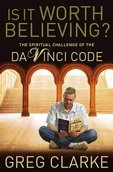
9) Is it worth believing? The spiritual challenge of 'The Da Vinci Code' by Greg Clarke (120 pages, from Matthias Media) [Extract]


10) I am also recommending the book: Faith & Fiction: The Fallacy of The Da Vinci Code and the Facts of Christianity (Armour Publishing). This is a response by Bishop (Methodist) Robert Solomon to the Da Vinci Code Controversy. If you are wondering whether it is good. Extracts are available. I would say that the book is concise but informative & useful. ... a good buy!

“Dan Brown has concocted an engaging tale of fact and fable. Bishop Solomon has retold the history story that is far grander and more beautiful than any human tale.”
Dr Scott Sunquist
Associate Professor Pittsburgh Theological Seminary, USA


By the way..., for those who dislike/lazy to read, American Christology scholar, Ben Witherington (PhD from Durham University) is also coming to Singapore for 2 nights of talk. An elder of the Methodist church and a member of the Society for the Study of the New Testament, he is currently Professor of New Testament at Asbury Theological Seminary in Kentucky. Dr. Witherington has written over 30 books, including The Jesus Quest and The Paul Quest, both of which were selected as top biblical studies works by Christianity Today. His recent book The Gospel Code (recommended above) has been described as “a much-need antidote to the history-twisting misinformation” that one finds in our culture and particularly in The Da Vinci Code. For those who read Case for Christ, he was one of the scholars interviewed by Lee Strobel.

The details are as follow:

Jointly Organised by theBible Society of Singapore and the National Council of Churches of Singapore (NCCS) to help us separate fact from fiction.

Venue: St. Andrews Cathedral.

Public Talk 1
Date: Thursday 1 June 2006
Time: 7.45 pm-10 pm
Subject: "*The Da Vinci Code*---Historical Fiction or Hysterical Fiction?"*

Public Talk 2
Date: Friday 2 June 2006
Time: 7.45 pm-10 pm
Subject: (1) "What were Jesus and Mary Magdalene really like?"
(2) "The Reliability of the Canonical Gospels"

Admission to the talks is free. Seats are limited; do come early.

Other links:

A helpful local website with useful links/info/materials on the DVC would be: The Da Vinci Code Project

"Was Jesus Married? A Careful Look at the Real Evidence (Mark D. Roberts)

Dan Brown's official website

Not InDavincible: A Review and Critique of The Da Vinci Code (James Patrick Holding)

Redeeming the Da VInci Code (Probe)

Dismantling the Da VInci Code (Sandra Miesel)

The Da VInci Code: Fact or Fiction?

Related Suggested Readings:

Jesus & Christian Origins Outside the New Testament by F F Bruce. (Eerdmans, 1974)

The New Testament Documents- Are they Reliable? by F F Bruce. (Eerdmans, 1973)

An opportunity to examine our faith:The Da Vinci Code

The Da Vinci Code is set to be release on 18-May-06 in Singapore. Directed by Ron Howard and starring Tom Hanks (as Harvard symbologist Robert Langdon), Ian McKellan (as French cryptologist Sophie Neveu), ... . Basically, the plot outline is this: A murder in the Louvre and clues in Da Vinci paintings lead to the discovery of a religious mystery protected by a secret society for two thousand years -- which could shake the foundations of Christianity.

For the Christian Community, the novel caused so much controversy as it said that Jesus never claimed to be God, and Jesus and Mary Magdalene were married and had a child. As a result, many Christians are questioning their faith after reading/hearing of The DaVinci Code. While Dan Brown claimed that hi novel is based on facts. A close examination would show that this is not true. For example, Dan Brown wrote: “More than Eighty gospels were considered for the New Testament, and yet only a relatively few were chosen for inclusion – Matthew, Mark, Luke, and John among them…. (p. 231) But if I did not get it wrong, there were only 12 other gospels in circulation during that time, and these clearly not ‘inspired Scripture. The Church fathers also do not cite from those gospels. Dan Brown also mentioned that there is this The Gospel of Thomas written by the biblical Thomas. However, we know this is untrue too. We know that not even liberal theologians believe this to be true, not to mention that The Gospel of Philip was written by the biblical Phillip!

For me, I think God has his purpose in allowing the publication of Dan Brown's The Da Vinci Code. First, while there are a few megachurches in SIngapore, I would say that many Christians no longer understand what is involved in Biblical Faith! Bible are sometimes thought of as a collection of bedtime stories, esp. the OT part! Biblical inerrancy is forgotten. How the bible is transmitted to us is not understood. We claim to profess the bible is God's Word, but we stop believing or have doubts when some authors claim that they have the facts.

Easter has just passed. The resurrection of Jesus Christ Our Lord is the foundation of our faith. “And if Christ has not been raised, our preaching is useless and so is your faith.” I Corinthians 15:14 (NIV) Our faith is only as valid as the object in which it is placed. Do we believe the bible? If not, why are we celebrating Easter? ... or should we ask ourselves, "How much do we believe the bible?" I think our Lord is using the DaVinci Code by raising the questions that Dan Brown raised to help us evaluate the strength of our beliefs.

So, if anyone is to ask me whether Dan Brown is a heretic, or whether The Da Vinci Code is a heretical book, I would repond by saying that even if it, we should not be overly worried. Didn't Paul said that "it was right that there should be heretics" (I Corinthians 11:19)? I think the Church needs to encounter such tests in order to learn where the truth lies. Christians should not be afraid of The Da Vinci Code, but use it as an evangelistic opportunity. We should use this surge in interest in Jesus’ life as an opportunity to plants seeds of the gospel (1 Cor. 3:6). As Jan Hus (Wyclif's younger contemporary) once pointed out, the books of the heretics have the capacity to stir up sprituality, to clarify the truth, and paradoxically, to encourage the reader to seek the truth so as to avoid failling into the same errors.

Friday, April 07, 2006

On the Apocrypha(1)

For those who have been reading this blog, you might have noticed that it has been a while since I last wrote. but no... ... the blogger is not stopping his blogging as yet. Personal obligations has put a strain on my time, and so it seems that I've disappeared... if anyone has even noticed!!

busy though... I have been able to find time to go for the talk by Dr Tan Kim Huat on the Apocrypha last Thurs. It has been very a fruitful session for me. His sense of humour suprised me. I've always thought that theologians are dull. so I think I'm wrong ...

During the session, he has answered the questions which he has set out to address in a very concise but yet informative manner:

What kind of books are they?
Why are the books not canonised as scriptures?
How did they come about?

I must say that he is able to answer difficult questions in a simple way, and very fast too ... ... Though some of the people who asked the question doesn't seem too satisfied with his answer. One person asked about the relevance of the warning of Revelation 22:18-19 to including the Apocrypha as part the Canon of Scripture.

"and if anyone takes away from the words of the book of this prophecy, God will take away his part from the tree of life and from the holy city, which are written in this book."(Revelation 22:18-19, NASB )

Here is what I heard(hope I haven't understood wrongly): Dr Tan said that the fact that Revelation is the last book of the bible doesn't mean that this warning can be applied to the Canon of scripture as a whole. But as Revelation is the last book of the bible, people have always thought this warning is meant for the whole bible. ... maybe we have neglected the phrase "of this prophecy". But anyway, the person who asked this question on Revelation 22:18-19 seems unsatisfied and left early.(just my assumption!) This set me thinking. In our effort to understand the scripture better, do we rule out all interpretations which we do not favour? If this is so, how are we so sure we are correct? I think this all boils down to epistemology again!! or to put it more simply ... ... it's the question of the chicken and the egg again?!?

Wednesday, March 22, 2006

Talk on What is the Apocrypha?


What is the Apocrypha? The term "apocrypha" refers to a group of books that are not regarded as belonging to the canon of scripture, though many of them have been so regarded by the Roman Catholic Church and particular communities. The Protestant view is that they are valuable for understanding the events and culture of the inter-testamental period and for devotional reading. These books however were included in the original King James Version of 1611, as well as the Greek translation of the Old Testament known as "Septuagint."

What kind of books are they?
Why are the books not canonised as scriptures?
How did they come about?


These questions will be addressed in a talk to be given by Dr Tan Kim Huat on:

Date: 6 April 2006 (Thursday) ,Time: 7.30pm - 9.30pm
Venue: Wesley Methodist Church (Wesley Hall)
, 5 Fort Canning Road
Singapore 179493
Admission to the talk is free.

Do register soon to avoid disappointment as seats are limited.
Register by email at bem@bible.org.sg or by phone at 6337 3222 ext 26 (Ms Priscilla Ho).

Speaker’s Profile
Dr Tan Kim Huat is the Chen Su Lan Professor of New Testament, as well as the Dean of Trinity Theological college, Singapore. In addtion to his many scholarly interests (the chief of these being the subject of the emergence of Christianity within a Jewish matrix), he is concerned with the struggles and issues faced by ordinary church-goers. He is married to Michelle, and together they worship at Bethel Presbyterian Church.

Friday, March 17, 2006

Lent ...Lend?? Relevance?

Lent 2006 (1 March-16 April)

We are in the season of Lent again. For many in charismatic churches or non-traditional church, the word "Lent" is as strange as it can be! Is it the past simple and past participle of "lend"?? No... ... It has nothing to do with lending others things. Lent originally meant no more than the spring season. The name "Lent" comes from the Germanic (one of the branches of the Indo-European language family) root for spring. Initially the word simply meant spring, but later became associated with the fast. The name change occurred in the late Middle Ages as Catholic sermons were spoken in vernacular instead of Latin.

Basically, Lent is just a word employed to denote the forty days' fast (btw Ash Wednesday, excluding Sundays, & Easter Sunday) preceding Easter. The period of Lent recalls the forty days of our Lord's temptation. It is a season of penitence and fasting in preparation for Easter (Resurrection of the Lord Jesus Christ). ... a season for reflection and taking stock. It is a time of prayer and fasting in memory of our Lord's passion and death . However, as the subtitle of a CT article suggest, "Evangelical Protestants are caught between freedom in Christ and sacred observance". The Lenten Season reminds us that we have been over-indulgent, and that it would be an excellent idea to place ourselves under some kind of spiritual and physical discipline. However, do we really need a more rugged Christian discipleship during this period? Hasn’t the Anabaptists got rid of all Christian holy days.

We know that the word "Lent" nowhere appears in the NT. The same can be said of words "trinity", "providnece", etc.. Lent is also nowhere observed as a sacred season in the New Testament; hence it must be a development of later Church tradition. The same may be said, of course, of Christmas and Easter. ... The reowned preacher Charles Spurgeon said from the pulpit of the Metropolitan Tabernacle in 1871 that he certainly did not believe in the present ecclesiastical arrangement called christmas and spoke of his abhorrence of the mass from which its name derives, but now the bible-believing churches have taken leave of their sense of righteousness and holiness and absorbed this Roman pagan festival into their worship.

Biblical Basis??

As if to forewarn against such eventualities, Paul specifically cautions the Galatians against observing "days, and months, and times, and years," and against returning in bondage to "the weak and beggarly elements." (Galatians 4:9) The NASB calls it "the weak and worthless elemental things". Still, what is this "the weak and beggarly elements"? It denote that state of religious knowledge existing among the Jews before the coming of Christ, the rudiments of religious teaching. They are "of the world," because they are made up of types which appeal to the senses. They are "weak," because insufficient; and "beggarly," or "poor," because they are dry and barren, not being accompanied by an outpouring of spiritual gifts and graces, as the gospel is.

According to the Notes on Galatians 4:9 from the Original 1599 Geneva Bible Notes, "they are called impotent and beggarly ceremonies, being considered apart by themselves without Christ: and again, by that means they gave good testimony that they were beggars in Christ, for when men fall back from Christ to ceremonies, it is nothing else but to cast away riches and to follow beggary."

But now that you have come to know God, or rather to be known by God, how is it that you turn back again to the weak and worthless elemental things, to which you desire to be enslaved all over again? (Galatians 4:9, NASB)

Why then should not evangelical Christians forget about Lent altogether, and "stand fast in the liberty wherewith Christ hath made us free"? Why not stand alone in blazing nonconformity, and love God, and do as we please? So, Why doesn’t my church observe Lent? (Ken Collins has an interesting article on this.) Is Lent a Catholic observance? Pope Benedict XVI marked the beginning of this year's Lent with an Ash Wednesday Mass at Rome’s Basilica of Santa Sabina. By doing so, the pope hope to renew an ancient Lenten tradition long held by the Diocese of Rome. Generally, Catholics believe that the faithful are to grow in their love of Jesus Crucified, and they are to practice extra penance for their own and other people's sins. However, is it really a case where "our Roman Catholic friends, who by and large take the Lenten season rather seriously, will smile gently at clumsy Protestant attempts to mark the occasion, and will murmur, "Father, forgive them, for they know not what they do.""??

-------

Historically … …

The Reformed View

Historically, how do the Reformed Churches view these so called holy days?? Generally speaking, the Reformers such as Calvin, Farel, Viret, Bucer and John Knox were opposed to observing holy days such as Christmas, Easter, etc.. As they have no warrant in the word of God, they are not to be observed.The Reformers reasoned that the holy days were not divine but human institutions. They feel that the holy days brushed aside the importance of Sunday, and gave occasion to licentious and heathen festivities. The Reformers prefered the preaching of the facts of Christ's birth, death, etc. to be done on regular Sundays. For example, on the Sunday before Christmas the Christmas story was preached, etc.

In the General Meeting (1889) of the Reformed Presbyterian Church (Covenanter), a concern was also raised: The Protestant Church is fast returning to the heathen ceremonies of the Church of Rome, vieing with her in the observance of "Easter Sunday," etc. By means of Christmas trees, Santa Claus is becoming a greater reality and the object of more affection to children than the Saviour himself. --Reformed Presbyterian Church (Covenanter), Minutes of the General Meeting (1889).

G. I. Williamson (minister, Orthodox Presbyterian Church),in his On the Observance of Sacred Days (n.d.)., said that: Christmas, Good Friday, and Easter are Romish sacred days. By this we mean that they have their source in Roman Catholic tradition, rather than in Scripture. . . . [T]here have been times in the history of the Reformed churches when the truth on the subject of sacred days received reverent attention. Already, before John Calvin arrived in Geneva at the time of the great Reformation, the observance of Romish sacred days had been discontinued there. This had been done under the leadership of Guillaume Farel and Peter Viret. But Calvin was in hearty agreement. It is well known that when these traditional days came along on the calendar, Calvin did not pay the slightest attention to them. He just went right on with his exposition of whatever book of the Bible he happened to be expounding. The Reformers, Knox and Zwingli, agreed with Calvin. So did the entire Reformed church of Scotland and Holland. At the Synod of Dort in 1574 it was agreed that the weekly Sabbath alone should be observed, and that the observance of all other days should be discouraged. This faithful Biblical practice was later compromised. But that does not change the fact that the Reformed churches originally stood for the biblical principle. The original stand of the Reformed churches was Scriptural. That is the important thing.

Gordon H. Clark (professor, Covenant College, Reformed Presbyterian Church, Evangelical Synod),in The Holy Spirit (1993), too commented: It is amazing that a professor in a Presbyterian seminary should be so Romish and anti-Reformed. ... Now, Scripture does not authorize us to celebrate Pentecost. The same is true of Christmas. It began as a drunken orgy and continues so today in office parties. The Puritans even made its celebration a civil offense. And yet an argument for celebrating Pentecost was, "Don't all Christians celebrate Christmas and Easter?" No, they do not. My father's family and church never celebrated Christmas, nor did the two Blanchard administrations in Wheaton College. But what about Easter? Surely we must celebrate Easter, shouldn't we? Yes indeed, we should, as the Scripture commands, not just once a year in the spring, but fifty-two times a year.

-------


Indeed, non-Catholics should not dismiss Lent altogether. Just as every Sunday should be Easter, everyday should be Lent. Certain Scripture passages (Eccl. 3:1; Luke 22:19; Acts 20:16, and so forth) has also indicated that the Christian's observance of certain sacred periods is not wholly inappropriate. A basis for such observance may even be found in the divine order of Creation (Gen. 2:1 ff.). Surely it is not by accident that God established a rhythm in the universe, so evident in the natural order. Man is part of his universe; and just as our Lord had his seasons of prayer upon the mountain, so it is meet for us to spend time in contemplation of our Saviour and of his vicarious sacrifice in our behalf. And what better time is there for such sustained reflection than during the sacred days prior to the celebration of His resurrection?

Despite it perceived Catholic "connection", I believe that Lent still has its relevance. Rather than a time of rituals, or useless external religous observances, Lent can become a time when material things are put again in their proper secondary position; when we see in the spiritual the unconquerable forces of life. It can become a time of self-examination, when we reflect upon our present position in the pilgrimage and check our directions. It can become a time of personal readjustment, not through mental resolutions to do better but through yielding ourselves afresh to the God who demands to be obeyed. And it can become a time when, by following the battered path to Calvary, we identify ourselves once again with the Saviour who makes all things new.

However, unlike Christmas (with its Christmas tree and Santa Clause) and Easter (with its Bunny & Chocolates), Lent has not been very popular. But, as one Anglican bishop commented, the comparative lack of popular appeal that Lent exerts is not so surprising. At the heart of the “self help” culture is the picture of an individual consumer operating on his own profile and image to produce a more attractive figure. If such a person takes up religion, he tends to look on God as an asset in this process. For me, I think I have learnt that God promises new life to those who open themselves up to Him, who pass through the way of the cross, emptying themselves, so that they can be filled with the life that flows from the Godhead. Though we might have not noticed, God has become a peripheral to many of us Christians.

For me, Lent has been a period of special importance to me. Don't know if it is a coincidence..., but numerous difficulties I faced happened during the period of Lent. In 2001, 2002, 2005 and this year, I saw again and again the miraculous working of God in my life. Something that could not be explained in words happened. Non-christians have witnessed how "I" overcome this difficulty, but they do not know it was the miraculous act of God. They have asked, "How did you do it? How did the sudden improvement occur?". But deep inside, I know it was God, for the change was too great and too fast. For non-Christians (sadly, even for some Christians), miracles is something reserved for the non-interlectual, charistmatics or superstitious. They say, if we do not put in effort, will God help us? If we do not work, will God feed us? I used to believe that God only help those who help themselves. But, I have since learnt that this is not true. Instead, I've came to the conclusion that "God only help those who places their trust in Him.

For me, through the various difficulties which I faced during Lent, Lent has become a period of significance to me. Lent has become a time where I come to experience indepth the sufferings of our Lord Jesus Christ. For me, Lent is a time to recount the steps of Jesus to the cross culminating in the celebration of the resurrection on Easter Sunday. I've learned to believe (in contrast to my previous "say only") that the God who died to save us would not leave us alone to fend for ourselves. During 2005's trial, I found my faith strengthened. This year hasn't been too smooth sailing too either. But, as one Anglican Bishop wrote, "The promise of Easter is new life through the cross and resurrection of Jesus Christ but Christians have always been aware that there is an undertow in daily life that carries us away into negativity and forgetfulness. Our lives become old again. We need an annual review." We need to be constantly reminded that though we work to earn our gain, God alone is our provider!

Fasting help us to live more frugally and simply in order to tighten the drum-skin so that God’s beat can be heard more clearly in our lives. During Lent, fasting has become a part of this spiritual walk for many, but for me, despite the usefulness of fasting, Lent was more than these externals.

Christianity is right to offer a general invitation to all people to follow Christ. It is good that the threshold at the way into the Church is so low. Thereafter, however, the "demands" increase and we learn the cost of accepting the invitation to identify with Christ. The Christian life is not without its difficulties, but in our difficulties, we have Christ! I have something asked myself what is the source of these difficulties. Is it a result of trying to please my own needs and wants? I've learnt (& still learning) to ask myself whether I possess more zeal to please my own needs and wants, or to please others, than I have to please the living God.

"Stand fast in the faith, quit you like men, be strong." --1 Corinthians 16:13.

Last of all, I believe that trials and tribulations are not without its purpose. In my difficulties, I'm remindered that Jesus' trials and sufferings were even greater.... much greater. ... and His trials and sufferings were for us! As I struggle with the difficulties of life, I am comforted by the Lord's reminder that "Men ought always to pray and not to faint." (Luke 18:1.)

"Lord, what wilt Thou have me to do?" -- Acts 9:6.

Prayer is "the time-exposure of the soul" to God. As one theologian puts it, we do not pray so that God can hear us, BUT we pray so that we can hear what God is saying to us!!

And so, my prayer is this: Our Father in heaven,I claim Thy promise through faith in Thee and Thy Son, the Lord Jesus Christ. Give me courage to maintain that faith, help me to renew my faith in Thee daily, and to share it with those with whom I live and work. AMEN.

Worship During Lent

According to the The Worship Sourcebook (pp. 551-552),

Lent invites us to make our hearts ready for remembering Jesus’ passion and celebrating Jesus’ resurrection. ... As a period of preparation, Lent has historically included the instruction of persons for baptism and profession of faith on Easter Sunday; the calling back of those who have become estranged from the church; and efforts by all Christians to deepen their piety, devotion, and readiness to mark the death and resurrection of their Savior. As such, the primary focus of the season is to explore and deepen a “baptismal spirituality” that centers on our union with Christ rather than to function only as an extended meditation on Christ’s suffering and death.

Some Thoughts:

If our faith was composed of things like bricks or glass, or straw, what a paltry thing it would be. But our faith is in God, who was there "In the beginning, God." And when the Lord said, "Let there be . . .", God made the earth, the sky and stars, and the life upon the earth. "Faith is the victory that overcomes the world."

.... ... "Not my will, but Thine be done."

"We are not as much interested in what we can get from God in the act of prayer, but more what God can do with and through us. Our interest is not so much in obtaining but in surrendering and submitting, Prayer, understood in this way, is prayer as Christ understood it and practiced it."

-------

Some References used:

The Worship Sourcebook (Faith Alive Christian Resources, Baker Books, Calvin Institute of Christian Worship, 2004)

CT Classic article. The Challenge of the Lenten Season: Evangelical Protestants are caught between freedom in Christ and sacred observance.(This article originally appeared in the March 14, 1960, issue of Christianity Today.)

Anglican Diocese of London. Give up something - take on more, 08/02/05

Sunday, March 05, 2006

A dialogue between different theological traditions: Understanding the RO


What exactly is Radical Orthodoxy (RO hereafter)?

RO calls itself a critical Augustinian movement, and much of their theoretical and political critique picks up where Augustine’s City of God left off, taking on Nietzchean and post-Nietzschean philosophy, international capitalism, and the modern nation-state in the same manner that Augustine took on Rome and her many gods and philosophers. Theology and Social Theory begins by with the claim that social theories that call themselves secular are most often either heretical versions of Christian theological claims or paganism disguised in the language of science. Subsequent books in the RO tradition expand on these claims in the arenas of city planning, economics, linguistic theories, the national security state, and several other fields that demand both practical insight and theoretical acuity.(Source: http://www.theooze.com/articles/article.cfm?id=1029)

Radical Orthodoxy is an ambitious movement of intellectuals pitched against secular modernity and its denial of the transcendent.(Source: The Spirit of Things with Rachael Kohn on Sunday 7/11/99)

From I found out, the term "Radical Orthodoxy" was not coined until the mid-to-late 90's. The first book to be published under that title was a collection of essays titled "Radical Orthodoxy: a new theology", which came out in '99. Since then, that there has actually been an academic "series" of books (Milbank, Pickstock, Ward, Cunningham, Long, Smith, Bell, Rowland et. al.).

RO is a movement that has emerged at the cutting-edge of theology and postmodern philosophy.

".... the concern for RO theologians extends beyond a critique of the modern state and its operations; it extends to why we as Christians must recognize what modernity (with its liberal state and free market) is really up to. So in the words of William Cavanaugh (the most accessible RO theologian):
The invention of religion as a private leisure activity allows people to fit into the state and market without conflict, … Private religion is meant as a refuge, a solace for tired shoppers and harried office workers. Religion helps us escape from or cope with, but not change, the frenetic pace of life in consumer society." (Source: Ashley Woodiwiss's article)

In explaining what is Radical Orthodoxy, Gregory F. McCormick wrote that:
  • RO tends to refuse dualities of faith and reason and of nature and grace, resisting the idea of a purely fideistic, biblically-based narrative theology that is innocent of metaphysics and ontology.
  • RO refuses natural theology and a lot of the usual approaches pursued in contemporary analytic philosophy of religion.
  • RO intimates that analytic philosophy of religion pays no real attention to central developments in twentieth-century philosophy, analytic as well as continental.
  • RO believes that it is very important to have both a rooting in biblical exegesis, and an interest in speculative reflection. It sees no vast difference between the narrative imagistic mode of the bible, and philosophical discourse “about” the bible because there is, despite everything, something like philosophy in the bible; conversely, Greek philosophy is very closely linked to mythology, narrative and history.
  • The other major orientation in radical orthodoxy is towards post-modernism.
  • RO is so unapologetically committed to exploring metaphysical questions in detail as it believe that their neglect (or rejection) by theology leaves Christianity as a set of weird, ultimate beliefs in which Christians simply believe in life after death, which is an attitude that does not seem to connect with the perceived facts of the world.
  • RO resists the idea that we should give up on the cosmological, since such an abandonment would be to try and occupy a purely humanist space, which has now been overturned.

James K.A. Smith, of the Kuyperian Dutch Reformed tradition says:
RO is advocating a distinctly theological engagement with the world - and the academy that investigates this world - undergirded by the belief that the way to engage the contemporary world is not by trying to demonstrate a correlation between the gospel and cultural values but rather by letting the gospel confront these (apostate) values...The truth telos [goal] of the RO project is not simply a theology but a comprehensive Christian account of every aspect of the world - a properly and radically Christian account of social relationships, economic organization, political formation, aesthetic expression, and so on, engendering a radically Christian sociology, a radically Christian economics, and so forth....Because of this conviction, RO had (in)famously eschewed 'dialogue' with secular discplines. Unlike correlationist strategies that defer the 'truth' of the natural sphere to secular sciences...RO claims that there is not a single aspect of human existence or creation that can be properly understood or described apart from the insights of revelation.


However, if we want to know more on what this movement is about—its key thinkers and their texts, its strengths, and its weaknesses—then, James K.A. Smith's recently published volume, Introducing Radical Orthodoxy (Baker Books, 2004) fits our purpose.

Smith announces at the outset that he writes for three audiences:
1) the academy of theorists, graduate students, and advanced undergraduates; 2) theologians, both in the movement itself and in the Reformed tradition (in which Smith places himself); and
3) the church, in particular its pastors, worship directors, and other leaders.

So, I think this book shouldn't be too difficult!!


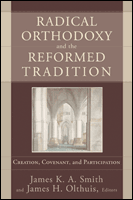
Radical Orthodoxy and the Reformed Tradition: Creation, Covenant, and Participation

Often, it is difficult for a dialogue between different theological traditions to take place. It is not easy to genuinely engage another tradition nondefensively, and with both charity and firmness. This book is a good example of this aspect which many who engages in dialogue seriously need.

Author: James K. A. Smith and James H. Olthuis, eds.
Edition: Paperback
Number of Pages: 304

Description:
In this work, leading scholars compare the differences and points of intersection between Radical Orthodoxy and the Reformed tradition.

James K. A. Smith and James H. Olthuis compiled this volume with the goal of mutual interaction, "expecting that RO could offer corrective lenses for some myopic aspects of the Reformed tradition, but we also thought there were ways in which RO could use a little reforming." More specifically, this timely discussion deals with many topics in current scholarly theological and philosophical debates, including participation, aesthetics, politics, covenant, and cultural theory. It represents an emerging willingness among RO proponents to examine and engage the Dutch Reformed tradition, and Calvin in particular, as well as the growing influence of RO on the Reformed tradition.

The book includes contributions from leading proponents of RO as well as leading Reformed scholars:

James K. A. Smith
John Milbank
Graham Ward
Robert Sweetman
Adrienne Dengerink Chaplin
Michael Horton
Lambert Zuidevaart
Jonathan Chaplin
Hans Boersma
Laura Smit
Nathan Kerr
Justin Holcomb
George Vandervelde
James H. Olthuis

This book offers a constructive dialogue that will appeal to scholars concerned with the intersection between RO and the Reformed tradition. A companion book to Smith's recently published Introducing Radical Orthodoxy, it will also be of interest to upper level college and seminary students of philosophy and theology.

Author Information:
James K. A. Smith (Ph.D., Villanova University) is associate professor of philosophy and director of the Seminars in Christian Scholarship at Calvin College. He is the author of Introducing Radical Orthodoxy and Speech and Theology.

James H. Olthuis (Ph.D., Free University) is emeritus professor of philosophical theology at the Institute for Christian Studies in Toronto. He is the author or editor of numerous books.

Endorsements: "The essays in this collection undertake a new sort of ecumenical theology based not on mutual concession but on the positive collective forging of a genuinely reformed Catholicism and a genuinely Catholic reform."--Catherine Pickstock, lecturer in the philosophy of religion, University of Cambridge

"This collection of essays constitutes an important and admirable dialogue between proponents of Radical Orthodoxy and the Reformed tradition, displaying areas of convergence as well as raising questions that require further discussion. While the book will be of particular interest to those committed to Radical Orthodoxy and/or the Reformed tradition, it should also be helpful to readers from all traditions who are interested in engaging and appropriating the insights of Radical Orthodoxy in the context of their own confessional commitments."--John R. Franke, professor of theology, Biblical Theological Seminary

"Attempts at dialogue between different theological traditions are more often failures than not as representatives of the different traditions defensively talk past each other. Radical Orthodoxy and the Reformed Tradition is a signal exception. The participants in the dialogue genuinely engage each tradition nondefensively with both charity and firmness. The result is not only fascinating but also informative. Each tradition gets illuminated in the process, surprising convergences appear, differences are explored, and the options are clarified. It is a great contribution."--Nicholas Wolterstorff, Noah Porter Professor Emeritus of Philosophical Theology, Yale University

Information on RO:
Gregory F. McCormick's Radical Orthodoxy.

The Spirit of Things with Rachael Kohn on Sunday 7/11/99:
Rejecting Modernity: Radical Orthodoxy

Ashley Woodiwiss's article What's so Radical about Orthodoxy? Introducing Introducing Radical Orthodoxy and the project to "re-narrate" reality without the word secular.

John Milbanks's Radical Orthodoxy; A New Theology. (Routledge, 1998)

Friday, March 03, 2006

Transcripts:Stephen Tong on the Reformed Movement

Seminar on the Reformed faith in Singapore
A 4-day (Feb 23-26 ) theological seminar by Reverend Dr Stephen Tong on the topic of the Reformed Movement was held at Newton Life Church.

Personally, I've always been very encouraged by his messages, whether it's the exposition of Romans, hebrews or james. On the topic of the Reformed Movement, He too encourages the Church to move towards a living that is more consistent with what the bible espouses. If you missed Stephen Tong's reformed seminar, here are the notes of the theological seminar which a wonderful lady (though i do not know her!!) called Mejlina uploaded. I hope that you'll be similarly encouraged!

The links:
23rd Feb Introduction to Reformed Evangelical Movement
24th Feb Its History
25th Feb Its Position
26th Feb Its Direction

For more information about him, one can visit: http://en.wikipedia.org/wiki/Stephen_Tonghttp://www.stemi.org/

The essence of his message is -
Important aspects of Christian faith:
1. Strong orthodox foundation - like the skeleton that gives framework
2. Evangelical fervency - like the flesh that cover the skeleton
3. Holy Spirit's work - like the blood that flows through our body, this makes a difference between a mechanical thing and a living being. The Church is the Body of Christ.

Our task:
1. Gospel Mandate - to the chosen ones
2. Culture Mandate - to the entire world

Reformed foundation:
Core Values: Sola Scriptura, Sola Fide, Sola Gratia, Solus Christus, Soli Deo Gloria

Direction :
God-centered religion, God-centered theology, God-centered faith, God-centered church, God-centered pulpit

History to understand the modern world: Renaissance, Reformation, Enlightenment

Call:
To return to God-centered foundation & to decisively surrender ourselves and sacrifice our lives for the right faith.